


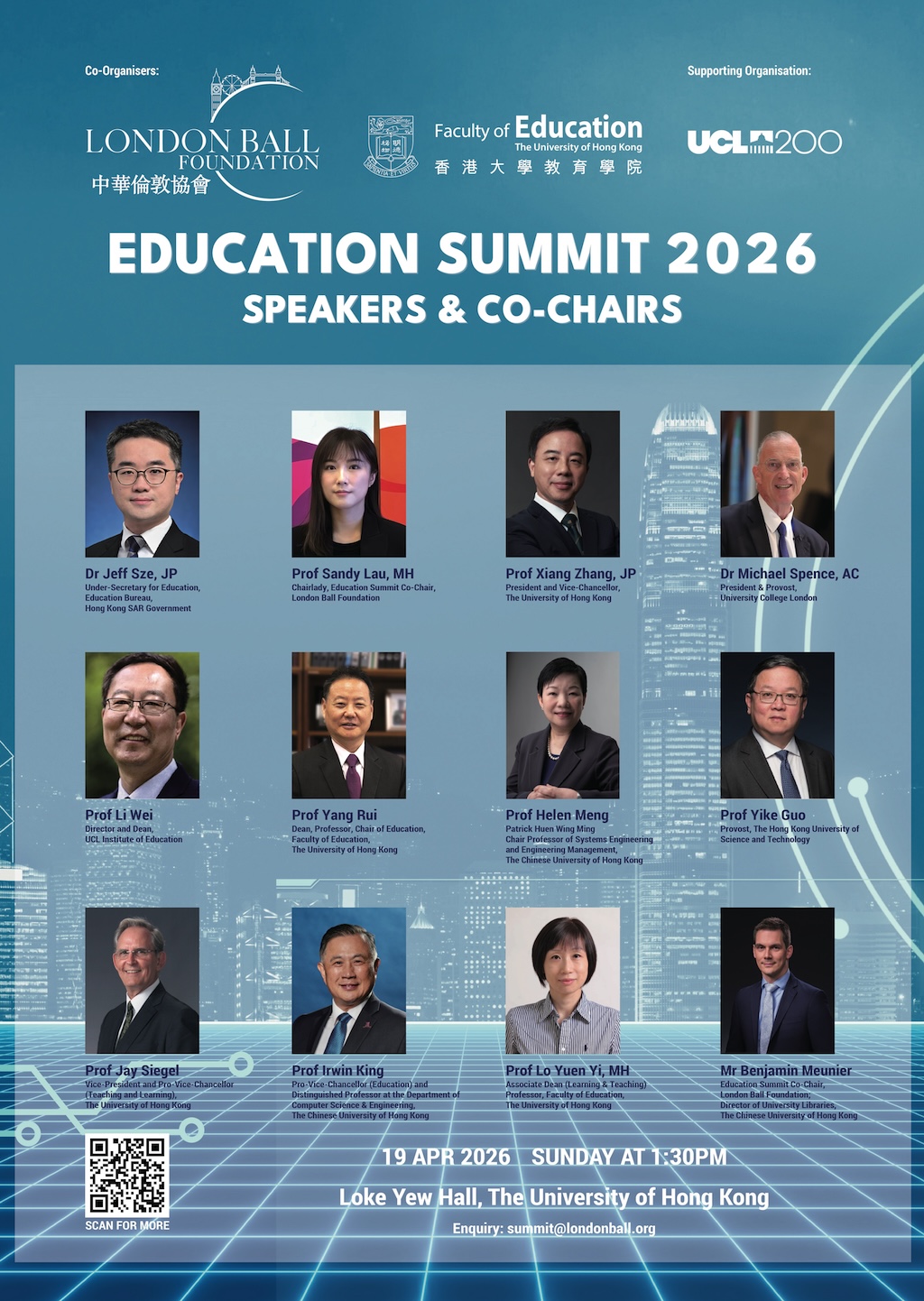

Dr Jeff Sze, JP
Under-Secretary for Education, Education Bureau, Hong Kong SAR Government
Dr Jeff Sze has been the under-secretary for education of the Government of the Hong Kong Special Administrative Region of the People’s Republic of China since July 2022. He supports the secretary for education in the administration of all education affairs in the region. Before taking up this post, he was the political assistant to the secretary for education for 10 years, and before joining the government he served as a secondary school teacher and conducted policy research in a thinktank. Dr Sze holds a bachelor’s degree in mathematics and a master’s degree in statistics from Stanford University, as well as a doctorate in management science from Peking University. He also holds a postgraduate diploma in education, majoring in economics, from the University of Hong Kong.
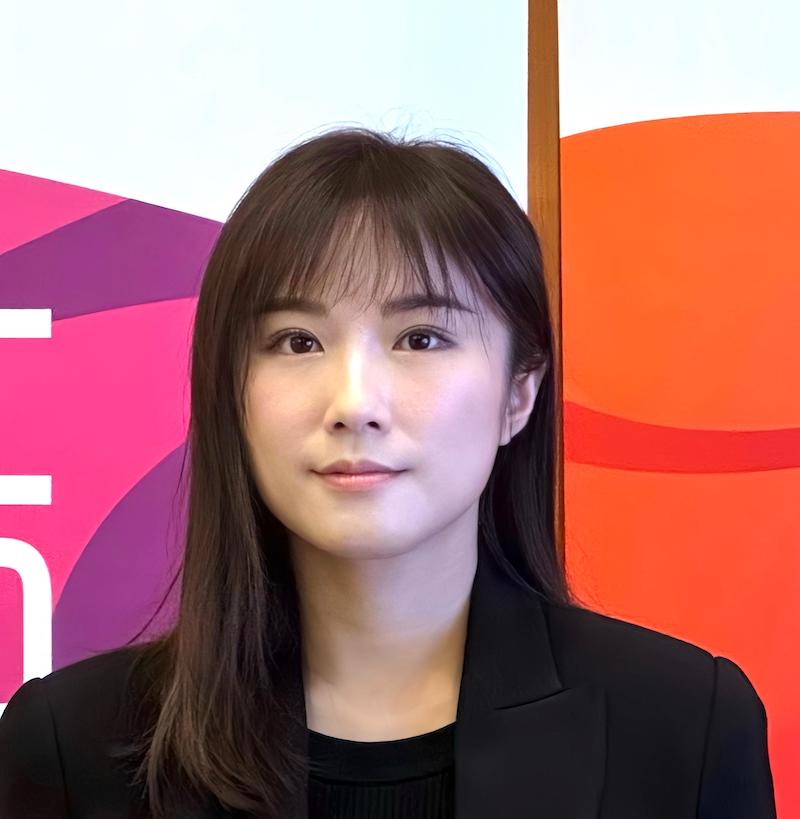
Prof Sandy Lau, MH
Chairlady, Education Summit Co-Chair, London Ball Foundation
Professor Sandy Lau, MH, has led transformative initiatives across education, healthcare, and civil society, with a strong focus on supporting vulnerable communities in Hong Kong. She is the co‑founder of the London Ball Foundation, which connects globally educated talent with local development through the Education Summit and the My Dream programme, empowering over 10,000 students across 30 schools. She also founded the Mindful Mandarins Foundation, supporting Chinese language education and cultural integration for ethnically diverse groups.
In public service, Sandy advises on youth wellbeing and community safety through roles on the Action Committee Against Narcotics and the Fight Crime Committee. Her contributions have earned multiple accolades, including the HKSAR Medal of Honour, Ten Outstanding Young Persons Award, Prestige Women of Power, World Outstanding Chinese Youth Award, and GBA Outstanding Caring Women Entrepreneur Award. She currently serves as Chief of Corporate Development, Fundraising and Public Relations at Po Leung Kuk. Sandy was appointed as Adjunct Professor at HKU Business School in 2026 and holds a BSc in Economics from University College London (UCL).
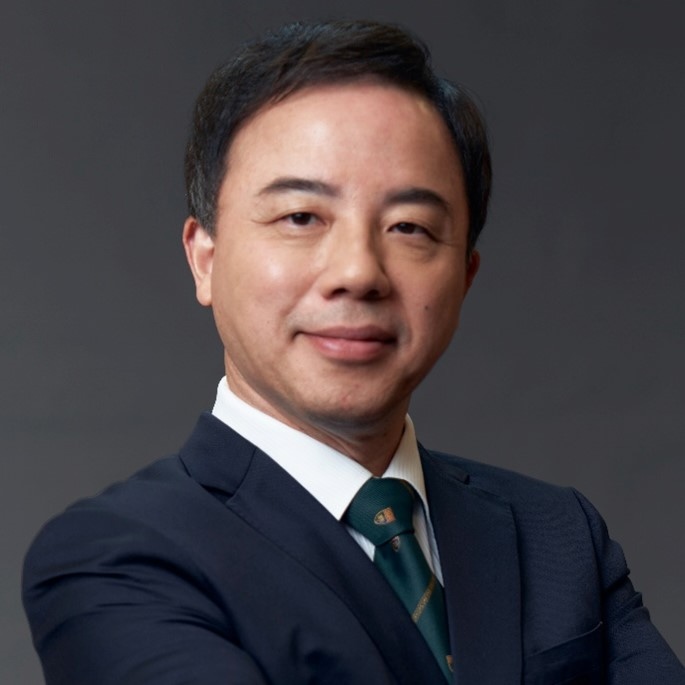
Prof Xiang Zhang, JP
President and Vice-Chancellor, The University of Hong Kong
Professor Xiang Zhang is currently the President and Vice-Chancellor of the University of Hong Kong, member of Chinese Academy of Sciences (CAS) and also US National Academy of Engineering (NAE). Professor Zhang's research focuses on materials physics, metamaterials and nano-photonics. He has published over 410 journal papers including over 100 publications in Science and Nature family series. In 2008, Professor Zhang's research was selected by Time Magazine as one of the "Top Ten Scientific Discoveries of the Year" and "50 Best Inventions of the Year", Discover Magazine's "Top 100 Science Stories" in 2007, and R&D Magazine's top 25 Most Innovative Products of 2006. In 2019, his research team's work on "Casimir effect" was selected as one of the Top 10 Breakthroughs for 2019 by Physics World.
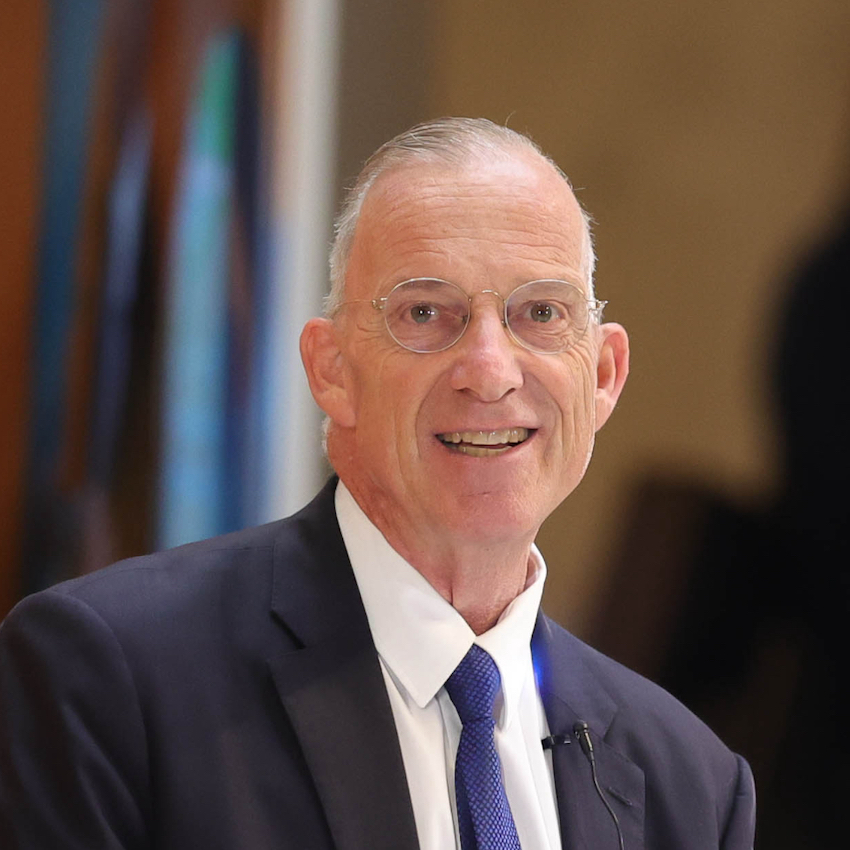
Dr Michael Spence, AC
President and Provost, University College London
Dr Michael Spence AC joined UCL as President & Provost in January 2021, joining the university from the University of Sydney where he was Vice-Chancellor from 2008 to 2020. Dr Spence led development of the UCL Strategic Plan 2022-27, setting out UCL’s priorities and ambitions for that period, and oversaw the relaunch of UCL’s Grand Challenges programme, supporting the academic community to work together on cross-cutting, multidisciplinary solutions to the world’s most complex issues.
During his tenure, UCL’s reputation as an academic powerhouse has also grown, with accolades including Sunday Times University of the Year 2024. He has also overseen the opening of UCL East, UCL’s major new campus in East London, building key strategic relationships with local government, businesses and community organisations in that area. Furthermore, through his work with UCL's philanthropic community he has played a direct role in supporting an increase in philanthropic gifts to UCL, with £235.6 million raised in 2023-24.
As a long-standing proponent of universities as crucibles for debate and dialogue, he has established himself as a leading voice within the UK and beyond promoting the art of ‘disagreeing well’ and is spearheading a new programme of activities at UCL which explore approaches to developing the skill of constructive debate around challenging issues.
Dr Spence is recognised internationally as a leader in the field of intellectual property theory and holds a Doctor of Philosophy from the University of Oxford. An alumnus of the University of Sydney, Dr Spence has a BA with first-class honours in English, Italian and Law. His other languages include Chinese and Korean.
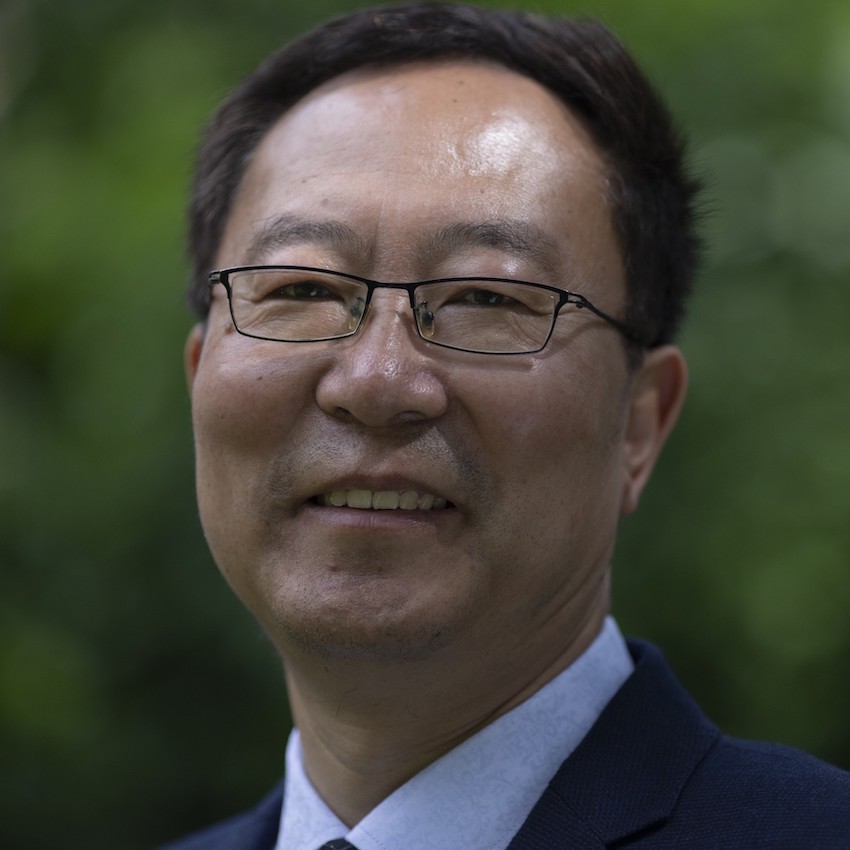
Prof Li Wei
Director and Dean, University College London Institute of Education
Professor Li Wei is Director and Dean of the UCL Institute of Education, UCL's Faculty of Education and Society, which has been ranked world number one for Education in the QS subject ranking for the last 12 years in a row. He is a language scientist and specialises in language development of bilingual and multilingual children and language in education policy and practice. He is Fellow of the British Academy, Academia Europaea, Academy of Social Sciences (UK), and Royal Society of Arts (UK).
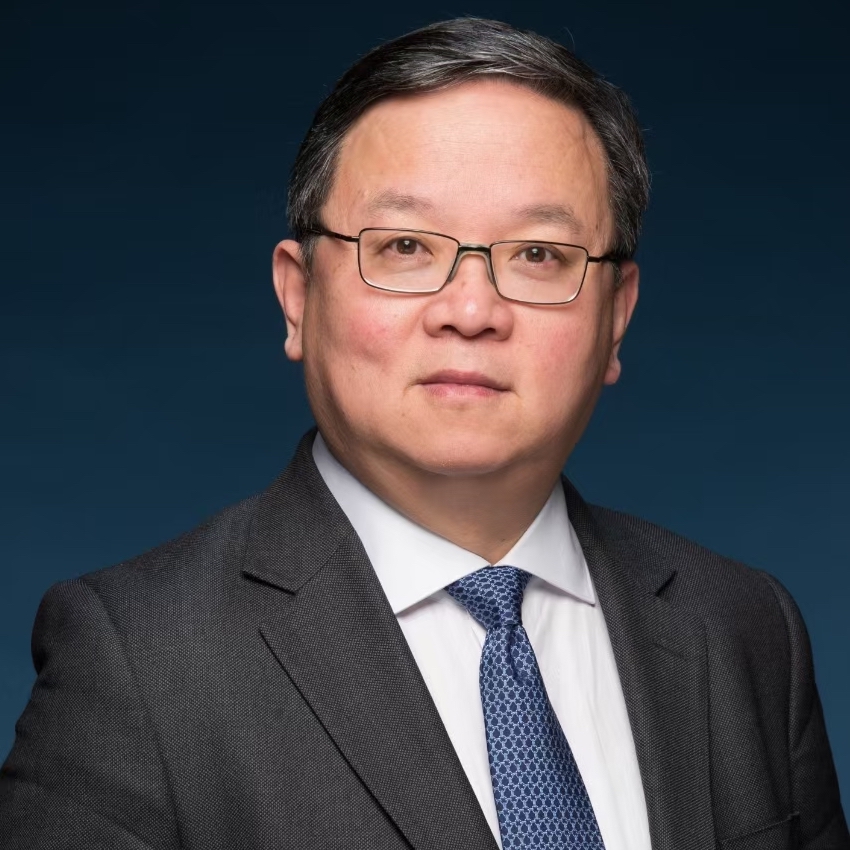
Prof Yike Guo
Provost, The Hong Kong University of Science and Technology
Professor Yike Guo is the Provost of the Hong Kong University of Science and Technology, Chair Professor in the Department of Computer Science and Engineering as well as Department of Electronic and Computer Engineering, and also Director of Hong Kong Generative AI Research and Development Center. He is a world-renowned computer scientist who has led several large-scale AI and data science research projects in Hong Kong, Mainland China, the UK and other European countries. He was the Founding Director of the Data Science Institute at Imperial College London, one of its seven Global Institutes, as well as the Vice President (Research and Development) at Hong Kong Baptist University. He is a Fellow of the Royal Academy of Engineering (FREng), a Member of Academia Europaea (MAE), Fellow of the Hong Kong Academy of Engineering Sciences (FHKEng), Fellow of the Institute of Electrical and Electronics Engineers (FIEEE), Fellow of the British Computer Society (FBCS), and Fellow of Chinese Association for Artificial Intelligence (FCAAI).
Professor Guo was awarded the Outstanding Contribution Award of the 2022 Wu Wenjun Artificial Intelligence Science and Technology Award, which is considered to be the highest award for Chinese AI science and technology. In June 2025, Professor Guo was named ""Leader of the Year 2024"" in the Education/Professional/Technology and Innovation category from Sing Tao News Corporation for his transformative contributions to education and technological innovation in Hong Kong. In November of the same year, Professor Guo was elected as an International Member of the Chinese Academy of Engineering (CAE) in recognition of his exceptional contributions to the Information and Electronics Engineering Division. The CAE is the nation's highest academic institution in engineering sciences and technology, and membership is considered as the highest lifelong academic honor in the field.
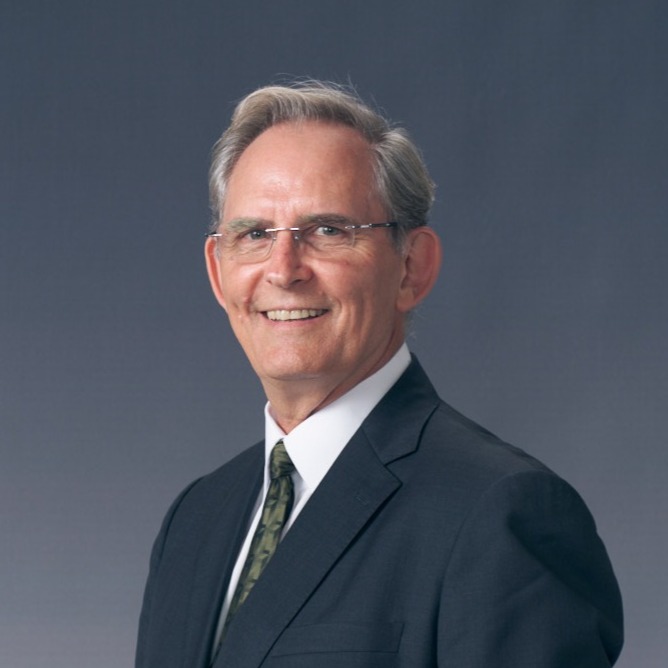
Prof Jay Siegel
Vice-President and Pro-Vice-Chancellor (Teaching and Learning), The University of Hong Kong
Professor Jay S. Siegel joined HKU in 2024 as a Professor in Chemistry and Senior Advisor to the President. He became the Vice-President and Pro-Vice-Chancellor (Teaching and Learning) in July 2025. A distinguished scholar in molecular design and synthesis, he specialises in structural chemistry and stereochemistry of supramolecular architectures.
Professor Siegel received his PhD from Princeton University in 1985, was a Swiss Universities Fellow at ETH Zurich from 1983 to 1984, and NSF-CNRS postdoctoral fellow at the University of Louis Pasteur in Strasbourg from 1985 to 1986. He began as Assistant Professor of Chemistry in 1986 at the University of California San Diego, was promoted to Associate Professor in 1992 and Full Professor in 1996. In 2003, he was appointed as Professor and Co-director of the Organic Chemistry Institute of the University of Zurich (UZH) and Director of its laboratory for process chemistry research. He served as Dean of Studies and Head of the Research Council for the Faculty of Sciences at UZH. He moved to Tianjin University in 2013 and was Dean of the School of Life Science and Dean of the School of Pharmaceutical Science and Technology. He was Qianren Scholar from 2013 to 2015, and recipient of the Chinese Government Friendship Award in 2015. In 2018, he was named one of the 40 most influential foreign experts in China’s 40 years of Reform and Opening-up.
Professor Siegel received Presidential Young Investigator Award and has also been recognised as an American Cancer Society Junior Fellow and an Alfred P. Sloan Fellow. He was elected an Arthur C. Cope Scholar by the American Chemical Society, Fellow of the American Association for the Advancement of Science, Fellow of Royal Society of Chemistry, Fellow of the American Chemical Society, and an Alexander von Humboldt Research Award Fellow. He was visiting professor at Princeton, Caltech, University of Basel, the Weizmann Institute and Tokyo Institute of Technology. He has served as President and member on numerous societies, foundation and journal advisory boards. He has run grant panels and award programmes for different institutions and funding bodies in the United States, France, Austria, Switzerland, Saudi Arabia, and Hong Kong.

Prof Yang Rui
Dean, Professor, Chair of Education, Faculty of Education, The University of Hong Kong
Professor Yang Rui is Dean and Chair Professor in the Faculty of Education at The University of Hong Kong. With over 37 years of academic career in Australia and China, including both Hong Kong and the Chinese Mainland, he has an impressive track record on research at the interface of Chinese and Western traditions in education. Bridging the theoretical thrust of comparative education and the applied nature of international education, Professor Yang’s research interests include education policy sociology, comparative and cross-cultural studies in education, international higher education, educational development in Chinese societies, and international politics in educational research. His international reputation is evidenced by his extensive list of publications, research projects, invited keynote lectures in international and regional conferences, leadership in professional associations and membership in editorial boards of scholarly journals.
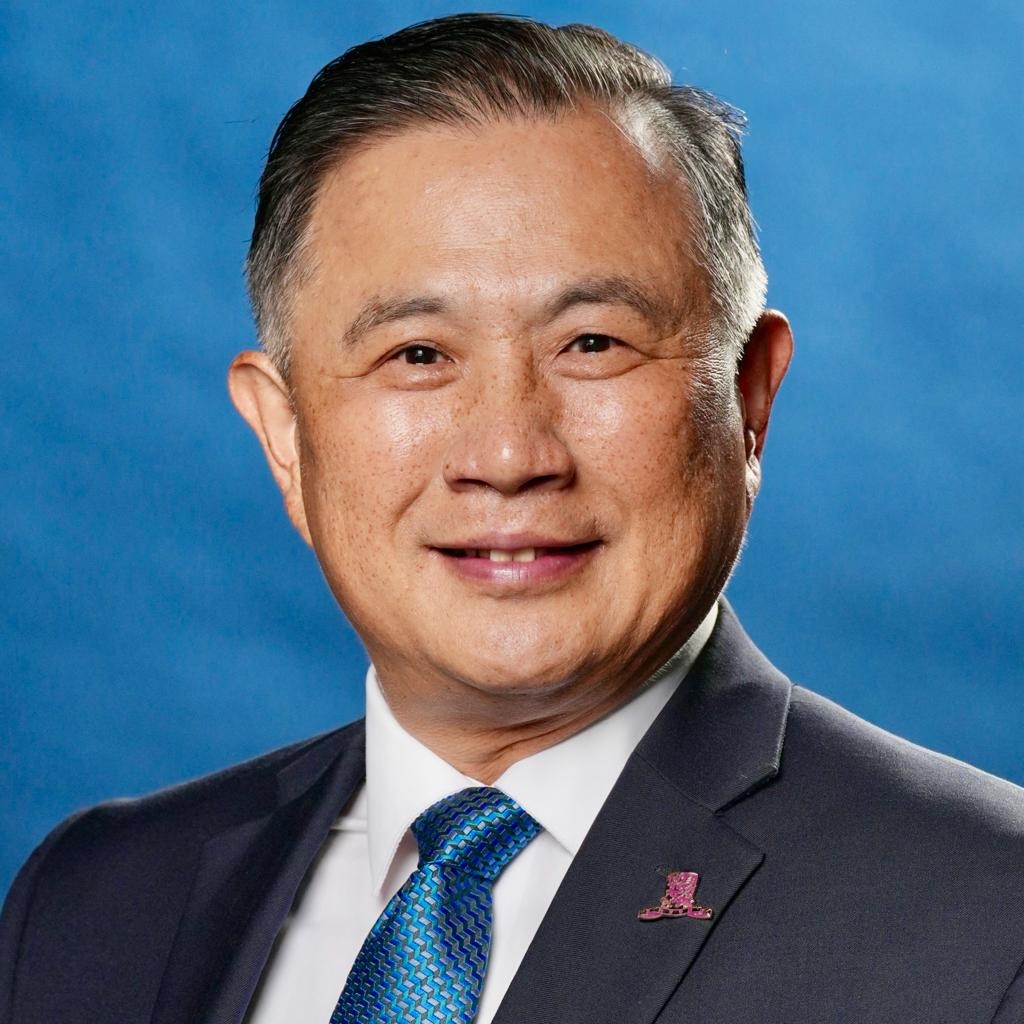
Prof Irwin King
Pro-Vice-Chancellor (Education) and Distinguished Professor at the Department of Computer Science & Engineering, The Chinese University of Hong Kong
Professor Irwin King has a diverse research portfolio in machine learning, social computing, artificial intelligence, and data mining. His scholarly contributions include publications in prestigious journals and editorial board memberships with international publishers. He has received numerous accolades, including Test of Time Awards at Association for Computing Machinery (ACM) Conference on Information and Knowledge Management, ACM Special Interest Group on Information Retrieval, and ACM Web Search and Data Mining, and the Dennis Gabor Award from the International Neural Network Society (INNS) for his pioneering work in machine learning within social computing. As a Fellow of ACM, the Institute of Electrical and Electronics Engineers (IEEE), the Association for the Advancement of Artificial Intelligence (AAAI), INNS, and the Hong Kong Institution of Engineers (HKIE), he has demonstrated exceptional leadership in the field. He has held significant positions, including President of INNS and General Co-chair for premier international conferences like WebConf, ACML, and RecSys. He is also the Director of the ELearning Innovation and Technology (ELITE) Centre, the Trustworthy Machine Intelligent Joint Lab, and the Machine Intelligence and Social Computing (MISC) Lab. His academic journey began with a Bachelor of Science degree from Caltech, followed by a Master of Science and Doctor of Philosophy in Computer Science from the University of Southern California (USC).
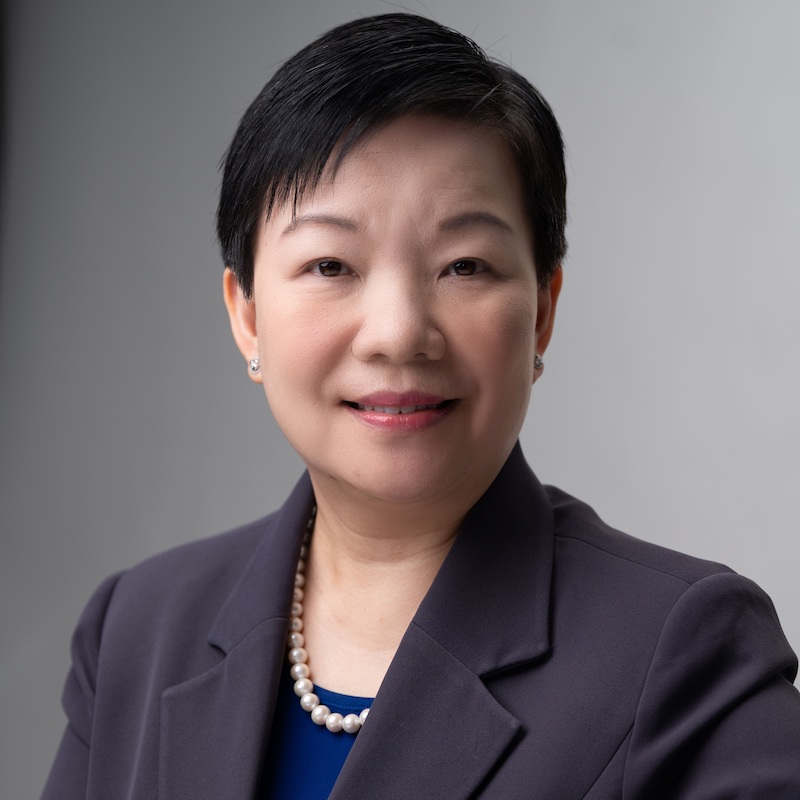
Prof Helen Meng
Patrick Huen Wing Ming Chair Professor of Systems Engineering and Engineering Management and Founding Director of the CUHK Ministry of Education Key Laboratory in Human-centric Computing, The Chinese University of Hong Kong (CUHK)
Professor Helen Meng is Patrick Huen Wing Ming Chair Professor of Systems Engineering and Engineering Management at The Chinese University of Hong Kong (CUHK). She is the Founding Director of CUHK’s Ministry of Education Key Laboratory in Human-centric Computing and also CUHK’s InnoCentre on AI, Centre for Perceptual and Interactive Intelligence. Her team’s AI-enabled, spoken langage-based dementia screening project was awarded the first HKSARG RGC Theme-based Research Scheme award in AI in 2019. As Curriculum Lead of the CUHK-JC AI4Future Project since 2019, she developed Hong Kong’s first pre-tertiary AI curriculum, emphasizing ethics, earning the 2021 Hong Kong ICT Gold Award. The abridged version of the curriculum has also been adopted by the HKSAR Government’s Education Bureau, to be taught in all local secondary schools starting in 2024. Helen’s accolades include the IEEE SPS Leo Beranek Meritorious Service Award (2019) for leadership and service, and fellowships from the IEEE, International Speech Communication Association, Hong Kong Institution of Engineers and Distinguished Fellow of the Hong Kong Computer Society. Her team has secured numerous awards, including First Prize at the DialDoc@ACL 2022 Challenge, INTERSPEECH Best Student Paper Awards (2023, 2024), US National Academy of Medicine Healthy Longevity Global Grand Challenge, and gold, silver and bronze medals from the International Exhibition of Inventions Geneva (2024, 2025).
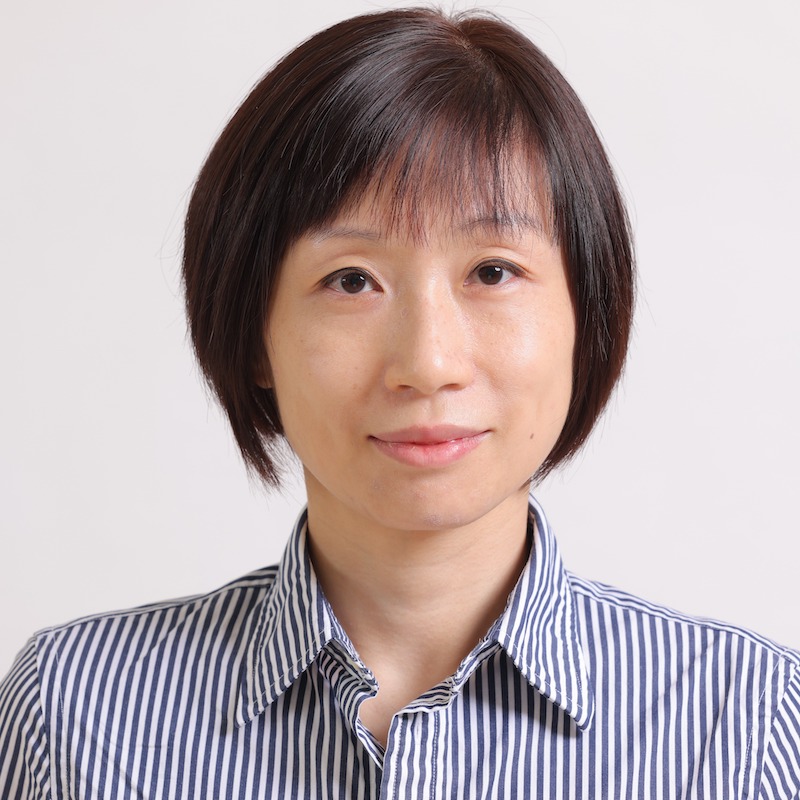
Prof Lo Yuen Yi, MH
Associate Dean (Learning & Teaching), Faculty of Education, The University of Hong Kong
Professor Lo Yuen Yi was prepared to be an English language teacher at The University of Hong Kong. After receiving her doctorate from the University of Oxford, she started conducting research on English Medium Instruction (EMI), with the ultimate goal of supporting teachers and students to teach and learn more effectively through their additional language. Her school-based research has generated practical curriculum planning, pedagogical and assessment frameworks, which have been disseminated to EMI schools and teachers in Hong Kong, the Chinese Mainland, Taiwan, Japan and the UK, through professional development workshops and school-based support programmes. She has been leading some large-scale research projects which have directly informed the Government’s Medium of Instruction policy.
Professor Lo is also dedicated to the community. She serves on various NGOs (e.g., Chatteris Educational Foundation) and Government committees, including the Standing Committee on Language Education and Research (SCOLAR) and the Assessment Working Group of the Chief Executive’s Award for Teaching Excellence.
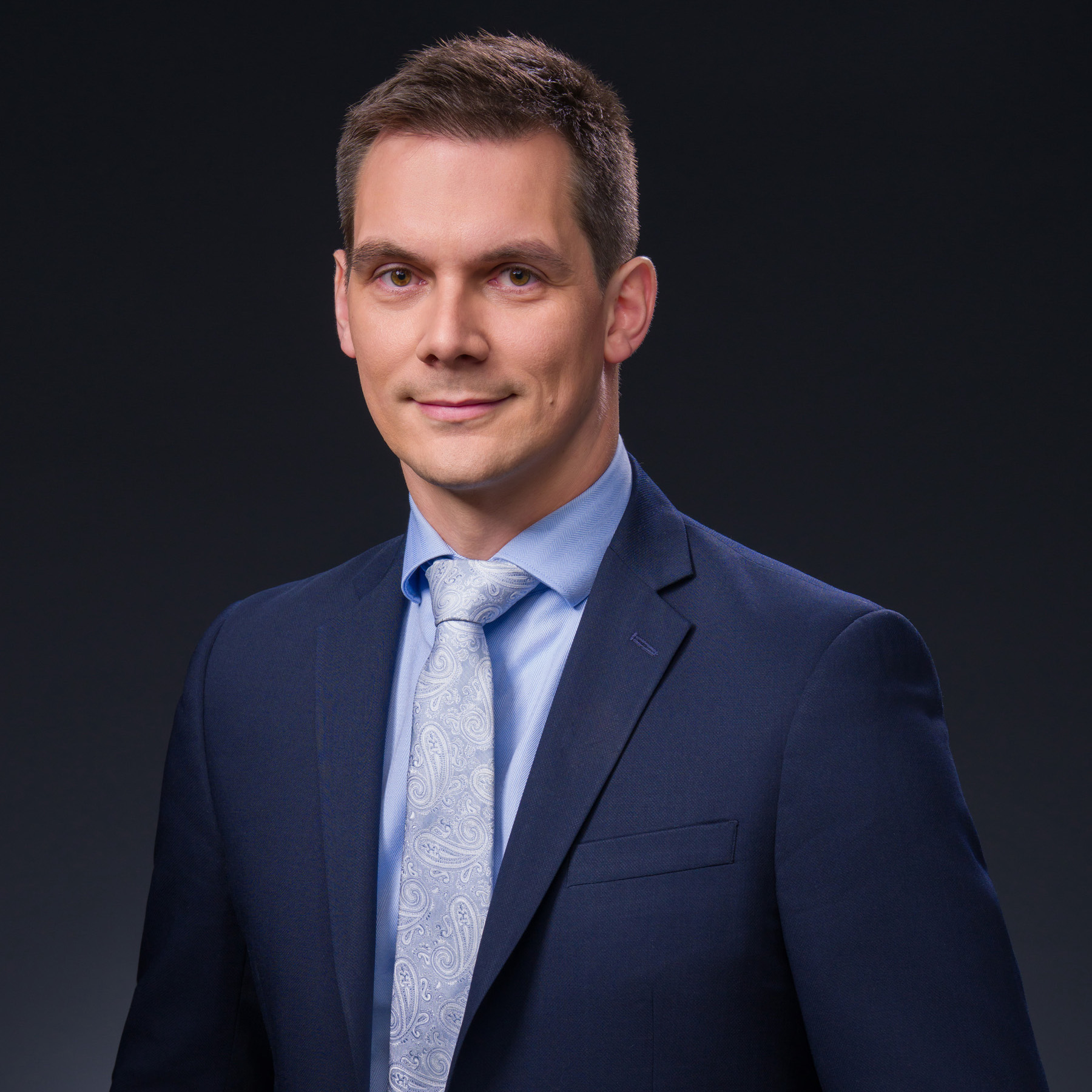
Mr Benjamin Meunier
Education Summit Co-Chair, London Ball Foundation; Director of University Libraries, The Chinese University of Hong Kong
Benjamin Meunier is the University Librarian at The Chinese University of Hong Kong (CUHK). Ben is leading a number of Open Science initiatives with Hong Kong universities to maximise the impact of research from China and the wider region, including Open Books Hong Kong and the Open Journals Hub.
Ben also serves as a Chair of the Pacific Rim Research Libraries Alliance (PRRLA), and is also Chair of the PRRLA Special Interest Group on AI. Ben is the Chair of the Guangdong-Hong Kong-Macau University Libraries Alliance (GHMULA) and leads a GHMULA Special Interest Group on Open Science. In Hong Kong, Ben is Vice-Chair of JULAC (Hong Kong university libraries) and chairs the JULAC Digital Initiatives committee. Ben is also Secretary of the International Federation of Library Associations (IFLA) Library Design Section.
Before moving to Hong Kong in 2023, Ben worked as Director of Operations at UCL Library, Culture, Collections and Open Science. Ben holds an MBA in Higher Education Management from the UCL Institute of Education and a BA in Ancient History and Classical Archaeology from the University of Warwick.
Ben is co-chair of the Education Summit.